
Materials & procurement
Wood Veneer vs Solid Wood Cabinets
The difference starts with which part of the cabinet uses wood. Separate the visible veneer or solid-wood door from the cabinet body, back, drawers and other components.
Discuss your specification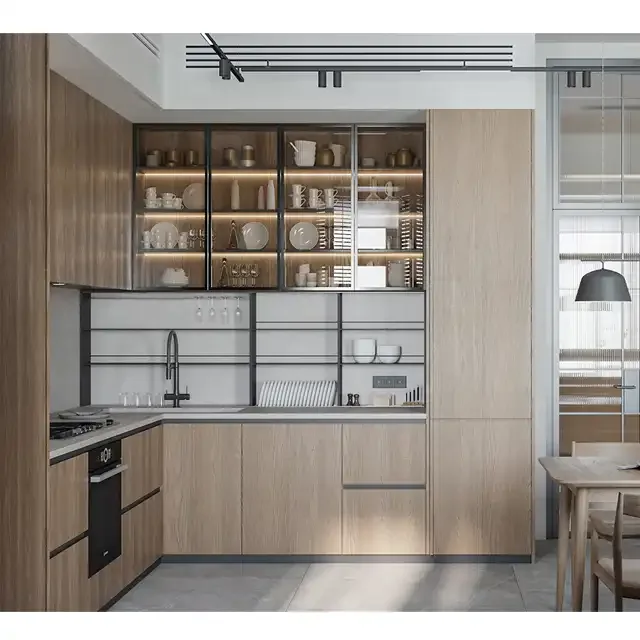
Read the component schedule first
Wood veneer describes a surface layer over a substrate. Solid wood describes the material used in a particular component. A veneer door can have a different core; solid wood cabinet doors do not establish that the cabinet bodies and backs use the same species or construction.
Compare a quotation component by component: fronts, frames, carcasses, backs, drawers, shelves and visible sides. This makes a wood veneer vs solid wood cabinets comparison more useful than relying on a single label for the entire kitchen.
Natural and engineered veneer offer different grain directions
Natural wood veneer retains the variation of the wood. Engineered wood veneer can provide a more designed and organized pattern. Kejia’s stained veneer approach is intended to keep the wood grain visible rather than automatically covering it with opaque paint.
Specify veneer type, substrate, stain, sheen and grain direction. A relatively consistent engineered pattern still needs sample approval and batch control; it is not a promise that every future delivery will look identical.
Name the solid-wood species and its use
Kejia’s knowledge base lists North American oak, red cherry, North American walnut and teak options. The actual species and origin need to be recorded from the supply information. A walnut-colored surface is not proof that the component is walnut.
Do not assign a species to a catalogue photograph solely from its color. Use the image as a design direction and confirm which species, finish and component construction will be used in your order.
Approve the range of natural variation
Review adjacent door samples or a suitable representative sample when grain matching matters. Record the intended grain direction, stain, sheen and acceptable variation across cabinets and matching cabinet fronts.
For repeat orders, retain the approved sample reference and discuss material availability and matching before a replacement or later batch is produced. The approved sample and component schedule should be linked to the drawing revision.
Specification checklist
| Question | Wood veneer | Solid-wood components |
|---|---|---|
| What identifies it? | A wood surface over a specified substrate | The named wood used in a specified component |
| What varies? | Natural grain or engineered pattern, stain and sheen | Species, grain, component construction and finish |
| What should be quoted? | Veneer type, core, edges and finish | Species, component allocation and finish |
| What should be approved? | Sample, grain direction and acceptable variation | Sample, construction and acceptable variation |
Questions before you order
How do I compare natural veneer vs engineered veneer cabinet doors?
Natural veneer retains individual grain variation; engineered veneer offers a more designed pattern. Compare representative samples, the substrate and finish, and agree matching expectations for your project.
Are solid wood kitchen cabinets solid wood throughout?
The phrase alone does not establish every component. Ask for a schedule showing the doors, frames, bodies, backs and drawers, including the species or panel construction used for each.
Prepared from Kejia’s product and overseas-buyer knowledge base, updated November 2026. Product-specific construction, documentation, price and supply terms are confirmed for the actual order.
Put the details into your project brief.
Share your room plans, selected designs, preferred materials, quantities and destination.
Request a custom cabinet quote